
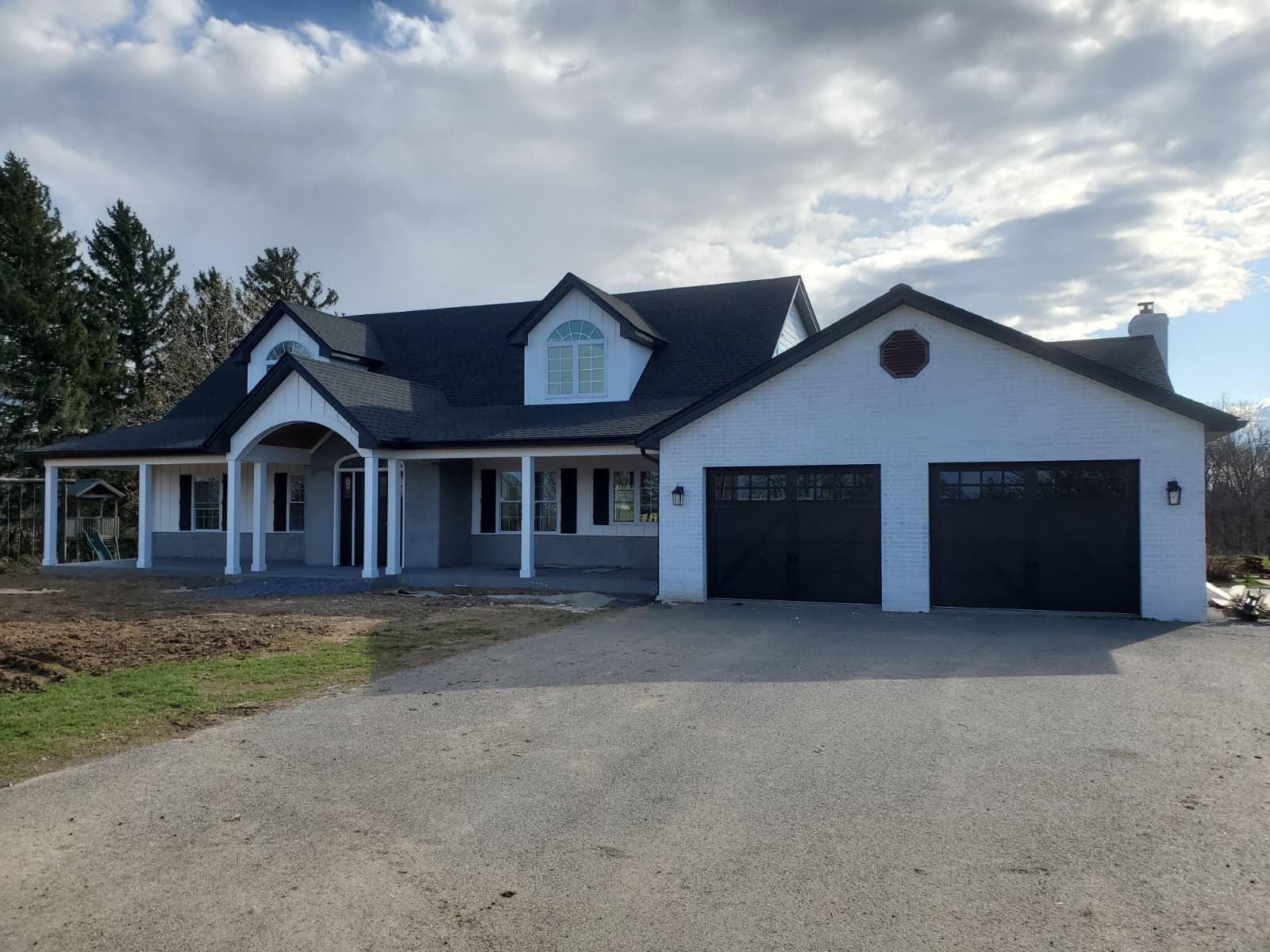
An uninsulated garage door is usually the largest uninsulated surface on a house. On a cold South Central Pennsylvania morning it behaves like an open wall, pulling heat out of the garage and out of whatever rooms share a wall or floor with it.
Insulation is the obvious answer, and R-value is the number everyone reaches for. It is a useful number and it is also the most misunderstood part of the decision. This guide covers what R-value does and does not tell you, how door construction changes the result, and the sealing details that quietly undo a well-insulated door.
What R-Value Actually Measures
R-value measures resistance to heat flow. A higher number means heat moves through the material more slowly. It is a genuinely useful comparison when you are comparing like with like, and the US Department of Energy explains the principle clearly.
The complication is that a garage door is not a uniform slab of material. It is panels, joints, a frame, a perimeter and a floor seal. A high R-value rating describes the panel at its thickest point, and heat does not politely confine itself to travelling through the middle of a panel. It goes around the edges, through the joints between sections and under a worn bottom seal.
So treat R-value as one input rather than the answer. A door rated modestly but built and sealed well will outperform a higher-rated door installed into a draughty opening.
How Doors Are Built, and Why It Matters
Construction is the thing R-value alone will not tell you. Three broad types account for most residential doors.
- Single layer, a single skin of steel with no insulation, the lightest, least expensive and least thermally useful
- Double layer, a steel skin with insulation applied to the back, better thermally and quieter, though the insulation is exposed
- Insulated sandwich, insulation captured between two steel skins, which is the most thermally effective and also the most rigid and dent resistant
The Benefits That Are Not About Heat
People buy insulation for warmth and then notice the other effects. A sandwich door is substantially more rigid than a single skin, which means it resists denting, flexes less as it travels and puts less strain on the opener and hardware over its life.
It is also markedly quieter, both in operation and as a barrier to outside noise. On a house where a bedroom sits above the garage, that alone often justifies the upgrade.
And where the garage is used as a workshop, a gym or storage for anything that objects to freezing, insulation changes the space from seasonal to year-round. Our residential garage door range covers single layer through to insulated sandwich construction.
Sealing Is Where Most Warmth Is Lost
A perfectly insulated panel with a gap around it is a perfectly insulated panel with a gap around it. Air movement through the perimeter usually costs more than conduction through the door face, and it is far cheaper to fix.
The bottom seal takes the worst of it. It sits on concrete, gets crushed flat over years, and cracks when it freezes to the slab and is torn free. Perimeter stop moulding around the sides and head is the other common failure, along with the thin seals between sections on older doors.
None of this is expensive to put right, and it is the single highest-return thing most homeowners can do before winter. If your door is sound but the seals are not, our service and repair team handles exactly that.
Pennsylvania Cold and the Mechanical Side
Cold affects the machinery as much as the comfort. Steel becomes more brittle as temperatures drop, and torsion springs that have been quietly fatiguing all year tend to fail on the first genuinely cold morning. The grease in bearings and rollers thickens, so the door runs harder and the opener works against more resistance.
Openers with automatic force settings can react to that extra resistance by reversing partway, which people often mistake for an opener fault when it is really the door telling them something. Photo eye alignment also drifts in cold weather as mountings contract. The safety requirements these systems have to meet are set out by the Door and Access Systems Manufacturers Association, which publishes the technical standards behind residential door operators.
Never attempt to adjust or release a torsion spring. They hold enormous stored energy and cause serious injuries every year. The International Door Association publishes homeowner safety guidance worth reading before touching anything on a door.
Preparing a Door Before the Cold Arrives
Most winter door failures are avoidable, and the work is small if it is done before the weather turns rather than during it.
- Inspect the bottom seal and replace it while the rubber is still pliable and the slab is dry
- Check the perimeter stop moulding for gaps, splits and daylight
- Clear the tracks of grit and leaf debris, which freeze into place and force rollers out of line
- Have springs, cables and rollers inspected by a technician before they are under cold stress
- Test the auto-reverse, and stop using the door until it is repaired if it fails
- Keep the slab beneath the door clear so the seal is not freezing into standing water
Insulating the Door Is Not the Whole Job
If the garage shares a wall or ceiling with living space, the door is one part of a larger envelope. An insulated door in an otherwise uninsulated garage helps, but the walls, ceiling and the door between garage and house all carry heat too.
There is a safety dimension as well. Tightening a garage without thinking about ventilation matters where vehicles, fuel or combustion appliances are stored, and carbon monoxide is a genuine risk in a sealed garage. The Consumer Product Safety Commission publishes guidance on carbon monoxide safety in and around the home.
We install and service insulated doors throughout South Central Pennsylvania, including Carlisle and Cumberland County and the surrounding area. If you are weighing up replacement against repair, our openers and operators page is also worth a look, since a heavier insulated door sometimes needs an operator matched to it.
Frequently Asked Questions
Is a higher R-value always better?
Can an existing garage door be insulated?
Why does my garage door struggle to open in cold weather?
Will an insulated door keep my garage above freezing?
Talk to Mountain Air Garage Doors
- Contact Number: +1 814-447-3570
- Email: sales@mtairgaragedoor.com
- Shirleysburg Main Office & Showroom
17339 Croghan Pike
Shirleysburg, PA 17260 - Monday – Friday: 7:00 AM – 5:00 PM