
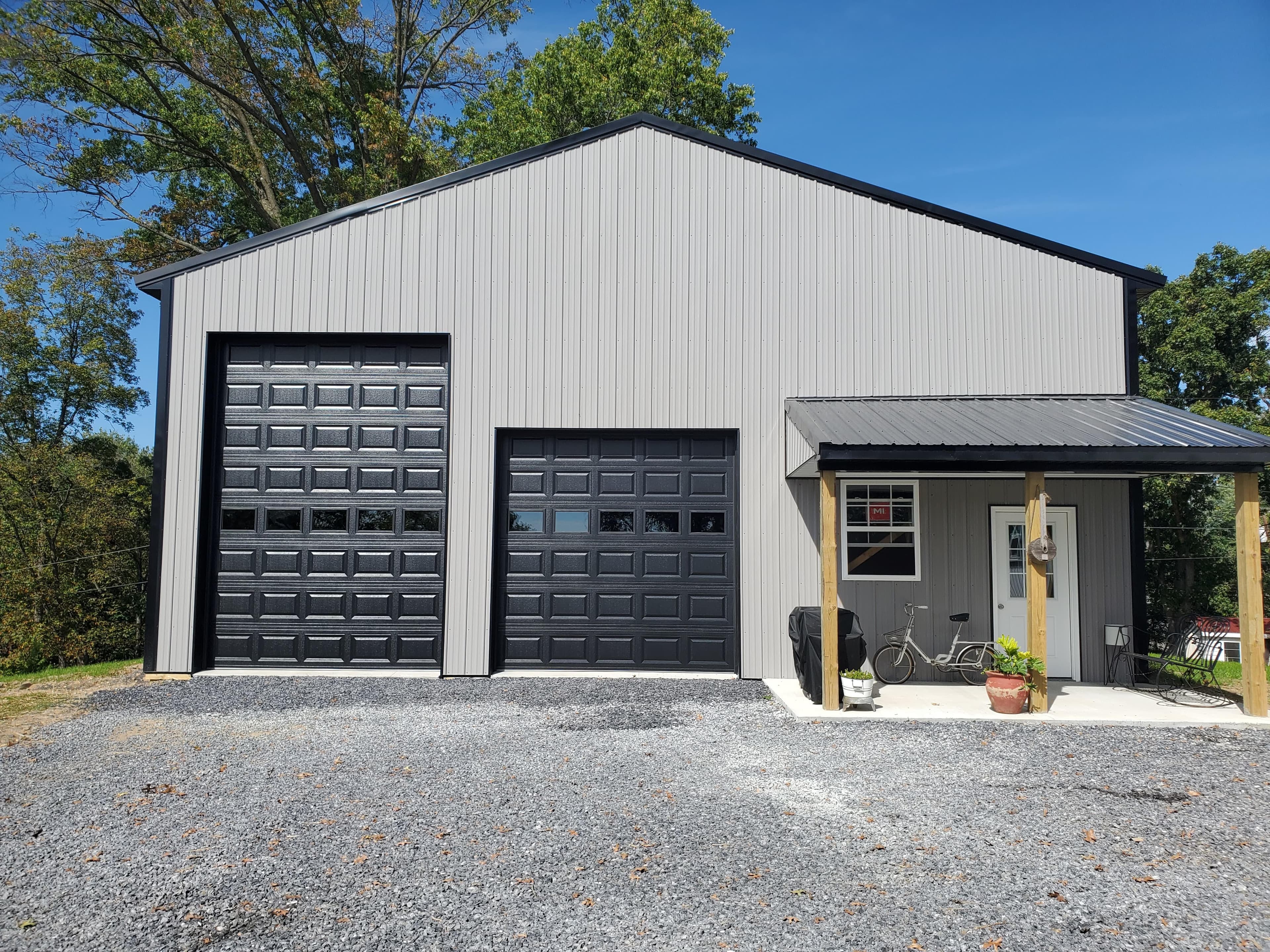
A farm building asks more of an overhead door than a house ever will. A barn door might cycle dozens of times in a working day, span an opening wide enough for a combine, and spend its whole life in dust, chaff and swinging temperatures. Fit a residential door to that job and it will fail early, usually at the least convenient moment.
We have been installing and servicing agricultural doors across South Central Pennsylvania since 2001. This guide covers what genuinely matters when you are specifying a door for a barn, equipment shed or farm workshop, and the points where ordinary residential thinking stops being useful.
Why an Agricultural Door Is a Different Specification
The single biggest difference is duty cycle. A household door might open and close three or four times a day. A door on a working equipment shed can do that before breakfast. Springs, rollers, hinges and operators are all rated for a finite number of cycles, and a component chosen for domestic use simply reaches the end of its life far sooner on a farm.
Opening size is the second difference. Farm equipment has grown steadily wider and taller, and a door sized to yesterday's machinery becomes an expensive obstacle. Wider openings also change the engineering underneath: longer torsion shafts, heavier sections and more careful bracing against wind.
Then there is the environment. Dust, grain, fertiliser residue and livestock humidity are all harder on hardware than anything a suburban garage sees. Galvanised fittings, sealed bearings and finishes chosen for the setting all extend the working life of the installation. The International Door Association publishes general guidance on door safety and maintenance that applies across residential and commercial settings alike.
Matching the Door Type to the Building
There is no single agricultural door. What suits a heated workshop is wrong for an open machinery bay, and the right answer usually follows from how the building is used rather than how it looks.
- Insulated sandwich sectional doors, where the building is heated or houses livestock and you want to hold temperature
- Ribbed steel sectional doors, a hard-wearing and economical choice for unheated equipment storage
- Rolling steel service doors, where wall space is tight or the opening needs a door that coils above it rather than running back along the ceiling
- Full-view aluminium doors, for workshops and inspection bays where daylight genuinely improves the work
- High-lift or vertical-lift track, where you need clear height beneath the open door for a raised loader or a lift
Headroom, Track Layout and Tall Equipment
Standard track carries the door back horizontally just under the ceiling. In a building with height to spare, that wastes the space and can leave the open door in the path of tall machinery. High-lift track takes the door further up the wall before it turns, and vertical-lift track takes it straight up, which suits buildings with substantial clear height above the opening.
Changing the track layout changes the hardware around it. Drum sizes, cable lengths and spring calculations all follow from the configuration, which is why this is a decision to make at specification rather than something to retrofit later. Our commercial and agricultural door team works this out against the actual building rather than a standard drawing.
Operators Built for the Work
Residential openers are designed around a handful of cycles a day and a light door. Commercial and agricultural operators are built to a different duty rating, with the motor, gearing and controls specified for continuous use and heavier sections.
Where headroom is limited, a jackshaft operator mounts on the wall beside the door and drives the torsion shaft directly, leaving the ceiling clear. It is a common answer in buildings where a ceiling-mounted unit would either not fit or would sit in the way of something else. Control choices matter too, since a three-button station, a pull cord and a remote all suit different working patterns. Our openers and operators page sets out the options in more detail.
Whatever is fitted, the safety reversing mechanism is not optional. Doors this size carry real force, and photo eyes and auto-reverse are the difference between a near miss and a serious injury.
Pennsylvania Weather and the Farm Door
Cold makes steel brittle and stiffens the grease in bearings and springs, which is why so many spring failures happen on the first hard morning of the season. Weatherstripping freezes to the slab, and a door dragged open against the ice tears the seal and strains the operator.
Wind is the other consideration, and a wide door on an exposed site presents a large surface to it. Wind load requirements are set locally rather than nationally, so what is required in Huntingdon County is not automatically what is required elsewhere. The Door and Access Systems Manufacturers Association publishes technical material on wind load standards, and we confirm the requirement for the specific site before specifying.
Insulation is worth thinking about even in an unheated building. A door with an insulated core is stiffer, quieter and less prone to denting than a single skin panel, so the benefit is structural as much as thermal. Where a building is heated, the US Department of Energy explains how R-value works and why the whole envelope matters rather than any single element.
Maintenance That Prevents Downtime
A door that strands a tractor inside a shed during harvest costs far more than the repair itself. Most agricultural door failures give warning, and most are preventable.
- Listen for changes. A door that has become louder, or that judders where it used to run smoothly, is telling you something
- Keep the tracks clear. Chaff, straw and dried mud build up and force the rollers out of line
- Check the bottom seal before winter, while replacing it is still a small job
- Never adjust or release a torsion spring yourself. They hold enormous stored energy and are genuinely dangerous
- Test the auto-reverse regularly, and stop using the door until it is fixed if it fails
Planning a Door for a New or Retrofitted Building
The cheapest time to get an agricultural door right is before the opening is framed. Rough opening dimensions, headroom, sideroom, backroom and the position of the power supply all constrain what can be fitted, and all are far easier to set correctly than to alter afterwards.
If you are retrofitting, the useful first step is an honest assessment of what the building is actually used for now rather than what it was built for. Buildings change use, and a door specified for a different purpose is often the real reason it keeps failing. Our service and repair team sees this regularly across Huntingdon County and the surrounding farm country.
For broader guidance on farm building planning and management, Penn State Extension is a genuinely useful independent resource for Pennsylvania producers.
Frequently Asked Questions
Can I fit a residential garage door to a farm building?
What is the widest door you can fit on a barn?
Do agricultural doors need to be insulated?
How often should a farm door be serviced?
Talk to Mountain Air Garage Doors
- Contact Number: +1 814-447-3570
- Email: sales@mtairgaragedoor.com
- Shirleysburg Main Office & Showroom
17339 Croghan Pike
Shirleysburg, PA 17260 - Monday – Friday: 7:00 AM – 5:00 PM